 November 26, 2026 @ 19:00 (
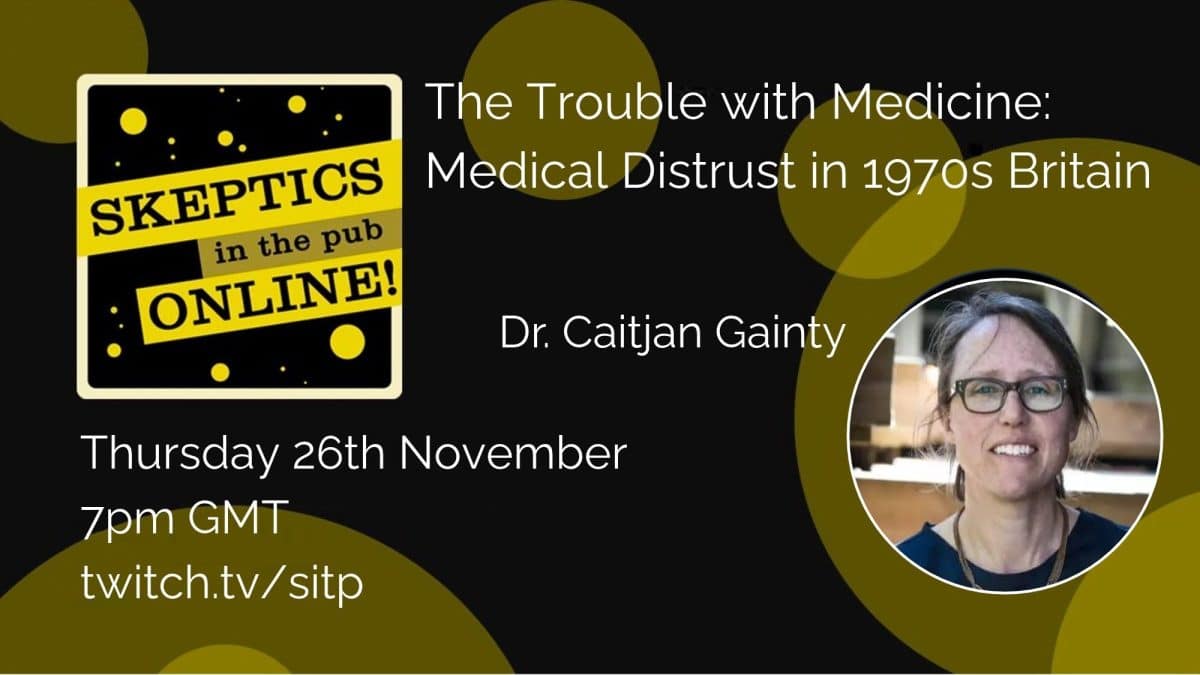
In 1972, the Guardian columnist Ann Shearer penned a review of the physician/epidemiologist Archie
Cochrane’s new book, Effectiveness and Efficiency: Random Reflections on Health Services. Though
we tend to remember the book now as point of origin for our current “evidence-based medicine,” for
Shearer and others who read it in 1970s Britain, it was firmly exposé. For, in the book, Cochrane
excoriated a system, she wrote, that “rarely [cures]…and by pursuing the myth that it does…deflects
attention, time and money” from its other and more pressing imprimatur: to care. The NHS didn’t
work. Medicine didn’t work, she read Cochrane as saying. Cochrane was hardly alone in this view –
in 1977 when the BBC ran an episode of its tentpole programme, Horizon, that dealt with this
‘Trouble with Medicine,’ as it was titled, it was full of sceptical medics eager to air their doubts to a
surprisingly substantial (ca 2 million) viewing audience.
In revisiting this sceptical moment, this lecture considers why and how distrust emerged around
medicine, noting its origins (largely from within medicine) as well as reckoning with its politics: not
quite the radical Left behind much of the activism of the era but also not so far off it, either. It ends by
contrasting this historical moment against our own, considering where distrust of medicine forms
now; how, by whom and for whom it is articulated; and what we might most sensibly make of its
messages.
Caitjan Gainty is an award-winning writer and a historian at King’s College, London. Her research has focused primarily on how modern biomedical healthcare systems have been made in the 19th and 20th centuries. Her first book, The Product of Medicine considered the unexpected and extraordinary debt the American healthcare system owes to the explosion of industrial forms and norms in the early twentieth century: from the standardization of everything – windowsills, wheeled beds and surgical procedures – to the factory-inspired design of Henry Ford’s hospital. Her most recent book, Healthy Scepticism, offers an account of medicine’s history and contemporary from the unique perspective of its doubters and dissenters, its critics and activists. In capturing the constructive spirit of much of this previous critique, the book, like the project it stems from, both speculates on just where this “healthy scepticism” has gone and what it might take for it to return now, in our fraught and polarized time.